[Get the best value clay bar treatment on Amazon today!]
# Clay Bar Treatment: The Ultimate Guide to a Showroom Shine
Okay, so you want that showroom shine, huh? You’re tired of dull paint, rough patches, and that general feeling that your car isn’t looking its best. I get it! You’ve probably heard about clay bar treatments, but maybe you’re not sure what they are, how they work, or if they’re even worth the effort. Well, you’ve come to the right place. This guide will walk you through everything you need to know to achieve that coveted showroom shine using a clay bar. Let’s dive in!
[Browse top-rated clay bar treatment on Amazon]
## Understanding the Need for Clay Bar Treatment
Before we jump into the how-to, let’s talk about *why* you might need a clay bar treatment. Even with regular washing, your car’s paint can accumulate contaminants that washing alone can’t remove. Think of it like this: your car is constantly bombarded with stuff from the environment.
* **Industrial Fallout:** Pollution from factories and other industrial sources.
* **Brake Dust:** Tiny particles from your brake pads that embed themselves in the paint.
* **Rail Dust:** If you live near train tracks, you’re likely getting tiny metal particles on your car.
* **Tree Sap:** Sticky and stubborn, tree sap can be a real pain to remove.
* **Road Tar:** That black, sticky stuff that kicks up from the road.
* **Bug Splatter:** Messy and can etch into your paint if left for too long.
These contaminants bond to your car’s paint surface, creating a rough texture and preventing waxes and sealants from properly adhering. This leads to a dull, lackluster finish. If you run your hand over your freshly washed car and it feels gritty, you definitely need a clay bar treatment. This gritty feel is caused by the contaminants sticking out of the paint surface. The clay bar will safely remove these contaminants, leaving you with a smooth, clean surface ready for polishing and waxing.
[Browse top-rated clay bar treatment on Amazon]
## The Clay Bar Treatment Solution: A Step-by-Step Guide
Here’s the breakdown of how to perform a clay bar treatment to get that showroom shine:
### Step 1: Gather Your Supplies
Before you start, make sure you have everything you need. This will save you time and frustration later.
* **Clay Bar:** Obviously! More on choosing the right one later.
* **Clay Lube:** Essential for lubricating the surface and preventing the clay bar from scratching your paint. Never use clay bar without lube!
* **Two Buckets:** One for washing, one for rinsing.
* **Car Wash Soap:** A good quality car wash soap.
* **Wash Mitt or Sponge:** Microfiber is best to avoid scratching.
* **Microfiber Towels:** For drying and wiping away residue.
* **Detailing Spray (Optional):** For added lubrication and cleaning.
* **Latex or Nitrile Gloves (Optional):** To keep your hands clean.
### Step 2: Wash Your Car Thoroughly
This is a crucial step! You want to remove as much loose dirt and grime as possible before you start claying. Use the two-bucket method: one bucket with soapy water and one with clean water for rinsing your wash mitt. Wash your car thoroughly, paying attention to areas that tend to collect more dirt, like the lower panels and around the wheels. Rinse thoroughly after washing.
### Step 3: Knead and Flatten the Clay Bar
Take your clay bar out of its packaging and knead it in your hands until it’s soft and pliable. This will help distribute the lubricating oils and make it easier to work with. Flatten the clay bar into a pancake shape, about the size of your palm. This gives you a larger surface area to work with.
### Step 4: Spray the Clay Lube Liberally
Spray a generous amount of clay lube onto a small section of your car’s paint (about 2ft x 2ft). You want the surface to be wet and slippery. Don’t be stingy with the lube! It’s better to use too much than not enough.
### Step 5: Gently Glide the Clay Bar
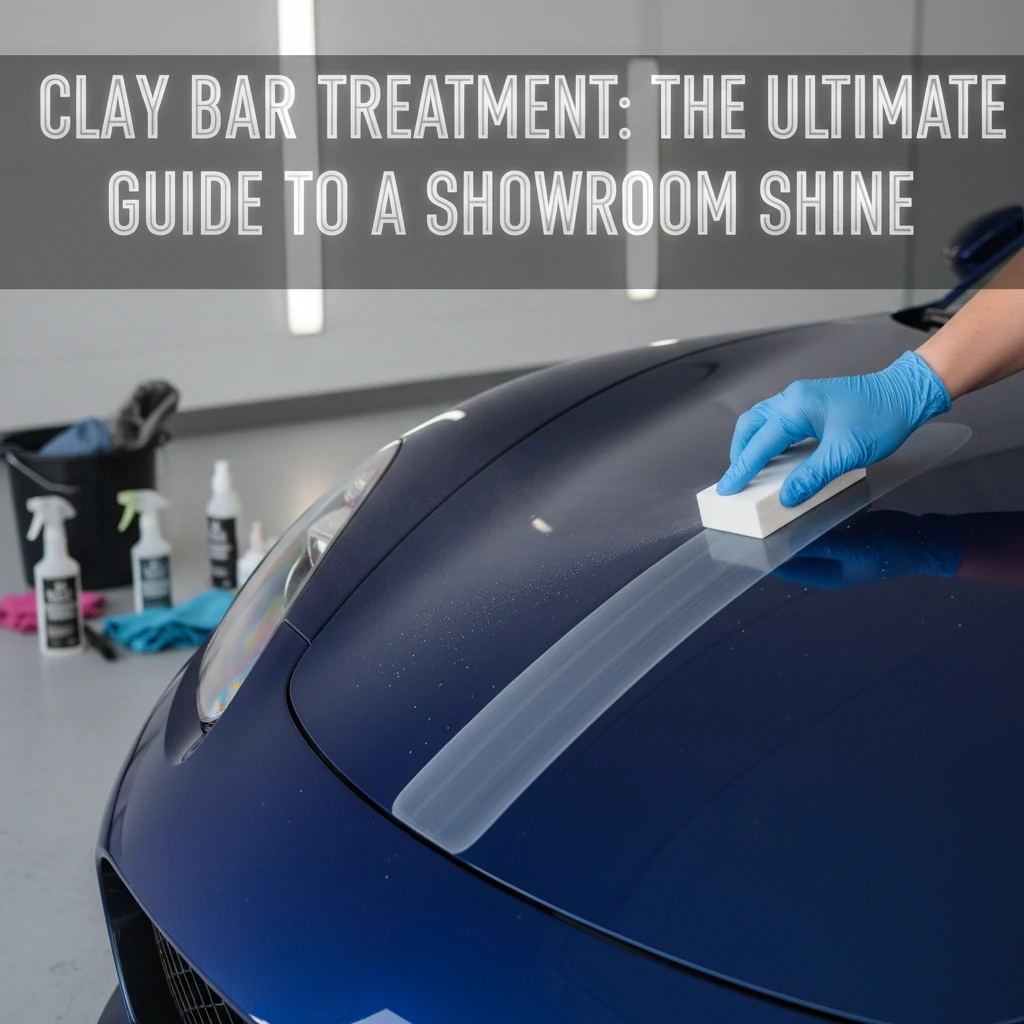
Gently glide the clay bar back and forth over the lubricated surface, using light pressure. You should feel the clay bar picking up contaminants. You’ll likely hear and feel a slight roughness at first. As the clay bar removes the contaminants, the surface will become smoother.
### Step 6: Inspect and Fold the Clay Bar
After working a small section, inspect the clay bar. You’ll likely see dirt and grime embedded in the clay. Fold the clay bar over on itself to reveal a clean surface. Knead it again to redistribute the lubricating oils. Flatten it out and continue claying.
### Step 7: Wipe Away Residue
After claying a section, use a clean microfiber towel to wipe away any remaining clay lube residue. Inspect the surface to make sure it’s smooth and clean.
### Step 8: Repeat the Process
Repeat steps 4-7 on the remaining sections of your car, working in small areas at a time. Remember to keep the surface well-lubricated and to fold and knead the clay bar frequently.
### Step 9: Final Wash (Optional, but Recommended)
After you’ve clayed the entire car, it’s a good idea to give it another quick wash to remove any remaining residue. This will ensure a perfectly clean surface for polishing and waxing.
### Step 10: Polish and Wax (or Seal)
Now that your paint is clean and smooth, it’s time to protect it! Polishing will remove any minor imperfections and swirl marks, while waxing or sealing will provide a layer of protection from the elements. This is where you really get that showroom shine! If you skip this step, you’re missing out on the full benefits of the clay bar treatment.
[Browse top-rated clay bar treatment on Amazon]
## Tools for the Job: Recommended Products
Okay, let’s talk about some specific products that will make your clay bar treatment even easier and more effective.
### Meguiar’s G8002 Smooth Surface Clay Kit
This is a great all-in-one kit for beginners. It includes two clay bars, a bottle of Quik Detailer (which works as clay lube), and a microfiber towel.
* **Key Features:** The clay is non-abrasive and safe for all paint finishes. The Quik Detailer provides excellent lubrication and leaves a glossy finish.
* **Why We Like It:** It’s convenient, affordable, and easy to use. It’s a great starting point for anyone new to clay bar treatments.
### Chemical Guys Clay Luber
If you’re looking for a dedicated clay lube, this is a great option. It’s designed to provide maximum lubrication and prevent scratching.
* **Key Features:** It’s pH-balanced and safe for all paint finishes. It also contains gloss enhancers to leave your paint looking shiny.
* **Why We Like It:** It’s specifically formulated for clay bar treatments and provides superior lubrication compared to other detailers. It also helps to prevent the clay bar from sticking to the paint.
Using the right products can make a huge difference in the final results of your clay bar treatment. These are just a couple of recommendations, but there are many other great products available on the market. Do your research and choose the ones that best suit your needs and budget.
[Browse top-rated clay bar treatment on Amazon]
## Pro-Tips and FAQs
Here are some extra tips and answers to common questions to help you get the best results from your clay bar treatment:
* **What type of clay bar should I use?** There are different grades of clay bars, from mild to aggressive. For most cars, a mild or medium-grade clay bar is sufficient. If your paint is heavily contaminated, you may need to use an aggressive clay bar, but be careful as it can be more likely to cause scratches.
* **How often should I clay bar my car?** It depends on how often you drive and the conditions you drive in. Generally, claying your car twice a year is a good rule of thumb. However, if you notice your paint feeling rough, you may need to clay it more frequently.
* **Can I use a clay bar on glass?** Yes, you can use a clay bar on glass to remove water spots and other contaminants. Just make sure to use plenty of clay lube.
* **What if I drop the clay bar on the ground?** If you drop the clay bar on the ground, discard it immediately! It will pick up dirt and debris that can scratch your paint.
* **How do I store the clay bar?** Store the clay bar in its original packaging or in an airtight container to prevent it from drying out.
* **Can I reuse a clay bar?** Yes, you can reuse a clay bar as long as it’s not too dirty or contaminated. However, it’s generally recommended to replace the clay bar every few uses.
* **What if I see scratches after claying?** If you see scratches after claying, it’s likely due to using too much pressure or not enough clay lube. You can usually remove these scratches by polishing your paint.
* **Can I clay bar in direct sunlight?** It’s best to avoid claying in direct sunlight, as the clay lube can dry out quickly and cause the clay bar to stick to the paint.
[Browse top-rated clay bar treatment on Amazon]
## Conclusion: Achieving That Showroom Shine is Within Reach!
So, there you have it – the ultimate guide to clay bar treatments! As you can see, achieving that showroom shine is totally within your reach. It might seem
[Check the latest prices and deals for clay bar treatment on Amazon today!]